
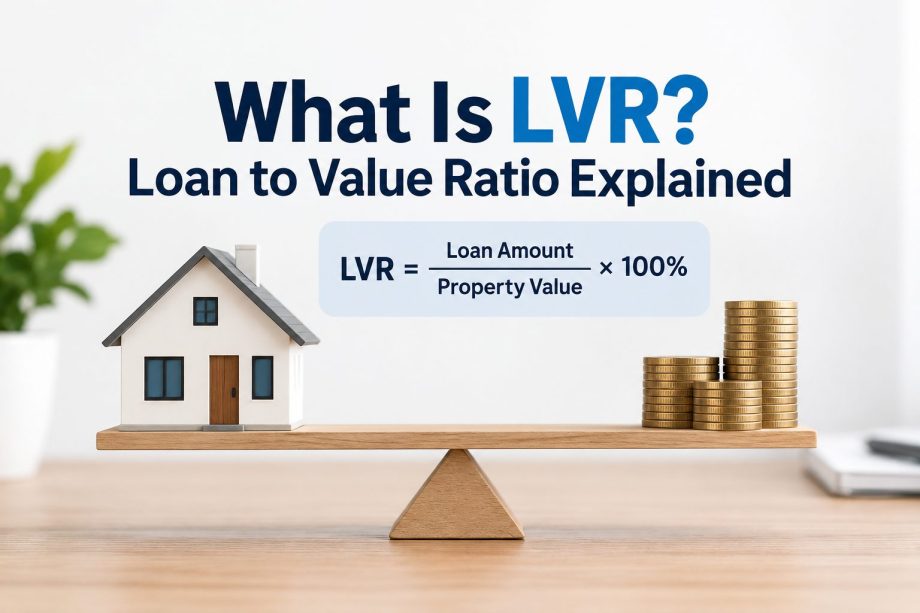
If you’ve seen the letters LVR on a loan document and wondered what they actually mean, you’re not alone. LVR meaning comes up constantly in home loans, investment lending, and caveat loans, yet it’s rarely explained in plain terms by the people using it. This guide breaks down the LVR meaning in full, walks through how to use an LVR calculator, and explains why this one number has such a big influence on what a lender will offer you. Understanding the LVR meaning early can also save you money, since it directly affects your rate and whether you’ll pay lenders mortgage insurance.
By the end, you’ll understand the LVR meaning well enough to work out your own ratio, spot why it changes your rate, and know what it has to do with property valuation and equity available in your home. This applies whether you’re buying your first place, refinancing, or comparing property secured lending options like a caveat loan.
LVR stands for loan to value ratio. In simple terms, it compares how much you’re borrowing against the value of the property securing the loan, expressed as a percentage. Once the LVR meaning clicks, most of the pricing and eligibility rules lenders apply start to make a lot more sense.
Here’s the basic idea: if you’re borrowing $400,000 against a property valued at $500,000, your loan to value ratio sits at 80%. The lower that percentage, the more equity you have sitting in the property relative to the loan, and the less risk the lender is carrying.
Every lender uses the same underlying LVR meaning, but the thresholds and pricing tied to different ratios can vary quite a bit from one lender to the next. That’s why the same property and the same loan amount can produce different offers depending on which lender’s version of the LVR meaning you’re being assessed against.
It’s also worth knowing that the LVR meaning stays exactly the same whether you’re a first home buyer, an investor, or a business owner using property as security. The formula never changes, only the thresholds and comfort levels each individual lender applies to the number once it’s calculated.
An LVR calculator does one simple job: it turns your loan amount and your property valuation into a percentage. The loan to value ratio formula behind it is straightforward.
Here’s the calculation in its plain form:
A quick example: a $360,000 loan against a $450,000 property valuation gives you 360,000 ÷ 450,000 × 100, which equals 80%. That 80% figure is the number a lender will use to decide your rate, your eligibility, and in some cases whether lenders mortgage insurance applies.
Running your own numbers through an LVR calculator before you apply is a useful habit, since it tells you roughly where you’ll land before a lender’s own valuation comes back. Keep in mind your own estimate of value and the lender’s formal property valuation won’t always match exactly, so treat any calculation you do yourself as a guide rather than a guarantee.
A quick self check with an LVR calculator can also flag problems early. If your own numbers put you right on the edge of an 80% threshold, it’s worth getting a more accurate sense of the LVR meaning for your situation before you lodge a formal application, since a small shift either way can change your pricing significantly.
Your loan to value ratio directly shapes the maximum loan amount a lender is willing to offer. Most lenders set their comfort zone somewhere around 80%, though this shifts depending on the loan type and the strength of your application.
The table below shows a rough sense of how LVR bands typically affect a standard home loan application:
| LVR Band | Typical Lender Response |
|---|---|
| Up to 60% | Most competitive rates, widest lender choice |
| 60% to 80% | Standard rates, broad lender choice |
| 80% to 90% | Higher rates, LMI usually applies |
| Above 90% | Limited lenders, higher LMI cost |
Understanding the LVR meaning behind these bands helps explain why two borrowers with the same income can end up with very different maximum loan amount outcomes, simply because one is borrowing at 70% and the other at 92%.
The maximum loan amount a lender will offer isn’t just about affordability in the income sense, it’s also capped by where your LVR meaning lands once the valuation comes in. Even a borrower with strong income and a clean credit file will hit a ceiling if the numbers push the ratio too high for that particular lender’s policy.
LVR for caveat loans works a little differently to a standard home loan, mainly because of how quickly these loans need to settle and the type of security involved. Caveat lenders still care about the loan to value ratio, but they usually apply it more conservatively than a bank would.
Where a bank might comfortably lend up to 80% LVR on a standard home loan, a caveat lender is often working within a much lower band, commonly somewhere between 50% and 70%, once any existing mortgage ahead of them is taken into account. This lower LVR meaning reflects both the short loan term and the fact that a caveat sits behind other security already on title.
If you’re comparing a caveat loan against other forms of property secured lending, understanding how the lender’s LVR meaning differs from a standard bank calculation will help you compare offers properly rather than assuming the same rules apply everywhere.
A caveat lender’s more conservative LVR meaning isn’t arbitrary either. Because settlement often happens within days rather than weeks, there’s less time to fully verify every detail, so a tighter ratio gives the lender a larger buffer if the property needs to be sold quickly to recover their funds.
Equity available in a property and the property’s as is value both feed directly into the LVR meaning calculation, so it helps to understand how they interact.
As is value refers to what the property is worth in its current condition today, separate from any future renovation or development plans. A lender calculating your loan to value ratio will almost always use this current, as is figure rather than a projected future value, unless you’re specifically applying for a construction or development facility.
Equity available is simply the gap between that as is value and any existing debt secured against the property. The more equity available, the lower your effective LVR meaning on a new loan, which generally translates into better pricing and more lender options.
Working out your equity available before you approach a lender is one of the simplest ways to get ahead of the process. If you know roughly what your property is worth as is and what you still owe, you can estimate your own LVR meaning in a few minutes rather than waiting on a formal valuation to find out where you stand.
Lenders mortgage insurance, commonly shortened to LMI, is directly tied to the LVR meaning on your loan. Most lenders will require LMI once your loan to value ratio climbs above 80%, since that’s the point at which they consider the risk high enough to insure against.
LMI protects the lender, not the borrower, if you default and the property sale doesn’t cover the outstanding loan. The cost is usually added to your loan amount or paid upfront, and it can run into thousands of dollars depending on your loan size and exact LVR meaning.
Bringing your loan to value ratio down below 80%, even by a small amount, can sometimes save you from an LMI premium entirely. It’s often worth checking whether a slightly larger deposit or a slightly smaller loan tips you under that threshold before you commit to an application, since the savings from a better LVR meaning can easily outweigh the cost of finding a bit more deposit.
Getting your head around the LVR meaning before you apply for finance puts you in a much stronger position, whether you’re buying your first home, refinancing an investment property, or arranging a caveat loan against equity you already hold. It’s one of the simplest numbers in lending, and also one of the most influential. A clear grasp of the LVR meaning now can save you thousands over the life of a loan, simply by knowing which side of a threshold you sit on.
If you’re weighing up how a project’s numbers stack up more broadly, our guide to gross realisation value explains how GRV works alongside LVR in a development context. And if you’re specifically looking at borrowing against equity you already have, our breakdown of 2nd mortgage loans covers how that type of lending is structured.
© Copyright 2015-22, Loanspal.com.au
